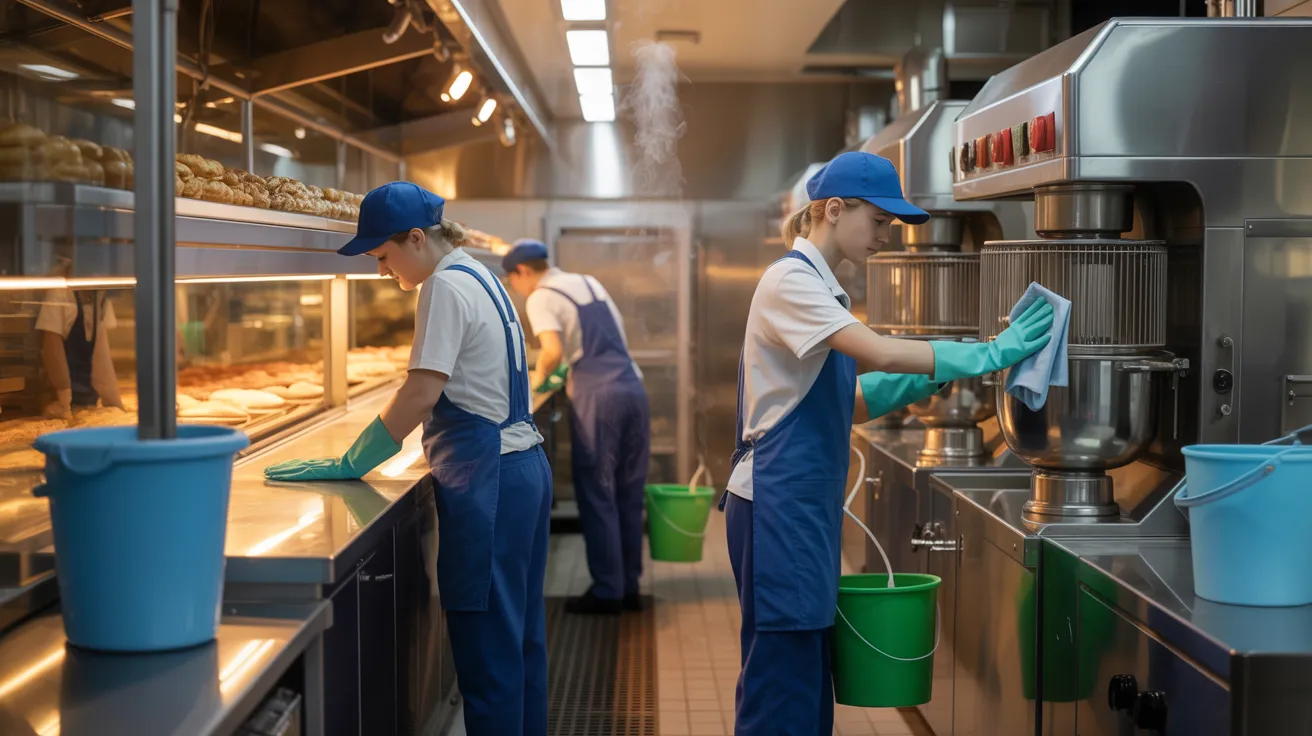
Commercial cleaning and food safety professionals in Brampton support restaurants, food centers, bakeries, warehouses, and food service operations staying compliant. They sanitize regularly touched surfaces, food contact areas, equipment, floors, drains, restrooms, and food handling spaces with approved chemicals, at correct dilution, and recording exposure duration. You require scheduled cleaning determined by risk, food throughput, food allergies, and regulatory assessments, plus documented proof backing HACCP, audits, and regulatory adherence. The following information explains what strong sanitation programs must contain.
Important Highlights
- Brampton's sanitation technicians clean for restaurants, grocery departments, commissaries, warehouses, bakeries, schools, mobile vendors, and allergen-sensitive operations.
- High-touch surfaces, food-contact equipment, kitchens, floors, drains, restrooms, and storage areas are disinfected using area-specific procedures to prevent cross-contamination.
- Certified providers confirm proper chemical concentration, suitability, and exposure duration, then log finalization with tests, audits, and corrective-action records.
- Routine, periodic, and annual operations distributed by zone comprise maintenance calendars grounded on hazard, output capacity, format changes, accidents, and standards.
- Emphasize contractors demonstrating hazard analysis knowledge, public-health competency, WHMIS instruction, protection, testimonials, color-coded tools, and inspection-ready cleaning paperwork.
Food Safety Cleaning Requirements for Brampton Establishments
Food safety cleaning is mandatory for any Brampton facility that handles, maintains, prepares, packages, or offers food. Apply it to your operation if it meets the criteria for health inspections, food codes, or HACCP requirements. This includes eateries, cafes, warehouses, supermarket areas, meat markets, fish stands, convenience outlets, and institutional food areas.
Adherent hygiene cleaning is additionally needed in supply facilities, manufacturing operations, cold storage areas, bakery retailers, educational nutrition programs, banquet halls, and food delivery hubs. Portable and seasonal operations count as well, like catering trucks, festival vendors, and pop-up food booths. Your establishment needs recorded sanitation procedures when your team prepare supplies, portion completed foods, reheat products, or manage allergen records. In Brampton, hygiene is not elective; it comprises lawful, operational, and customer protection adherence.
What Do Brampton Cleaning Experts Clean?
You require experienced cleaning professionals who disinfect high-touch surfaces, cooking areas, floor areas, and bathrooms to maintain food safety and public health requirements. These areas are targeted due to their high cross-contamination potential, falling hazards, and health code violations.
When you understand what they clean, you can ensure your operation's cleaning procedures satisfy operational and regulatory requirements.
Addressing High-Touch Surface Disinfection
Brampton janitorial experts emphasize high-touch surface disinfection because these frequently handled surfaces can transmit microbes and organic matter throughout a space. You require a scheduling system for sanitizing door handles, push plates, switches, railings, shared equipment controls, POS terminals, and refrigerator pulls. Using touchpoint mapping, experts determine every frequently handled zone and establish cleaning intervals
Maintaining a unidirectional cleaning method, changing towels, and separating cleaning tools according to zone ensures that plan remains verifiable, justified, and compliance-ready continuously
Cooking Zones, Walking Surfaces, and Restroom Environments
Professional cleaners in Brampton concentrate on kitchens, floors, and restrooms given that each location involves distinct contamination control, falling hazards, and health code requirements. In industrial kitchens, you need grease removal from cooking stations, appliance surfaces, drain systems, preparation areas, and backsplashes to reduce bacterial growth and pest activity.
Floor care that is documented should equally be anticipated. Technicians scrub and extract buildup from grout, tile, and vinyl flooring, then apply proper moisture management so you can limit falls and meet regulatory standards. They also address entry points where dampness and dirt enter the building.
Restroom sanitation involves disinfecting surfaces, fittings, separators, dispensers, and containers, restocking supplies and controlling odours. They also service restaurant moprooms, where chemical storage, sink hygiene, and drainage conditions can affect sanitation compliance and staff safety daily.
How Food Safety Cleaning Benefits Brampton Operations
To adhere to health code requirements and pass inspections, Brampton establishments must maintain appropriate cleaning protocols. You also reduce bacterial spread through proper cleaning of food-preparation surfaces, appliances, and frequently-touched items. Most importantly, you help protect public health by lowering see the full story the risk of foodborne illness in your facility.
Food Safety Regulations
Brampton food operations must comply with stringent health requirements, so food safety cleaning is essential to fulfilling health codes, safeguarding customers, and avoiding penalties. You must maintain hygienic food handling zones, recorded sanitation plans, proper chemical use, and traceable training practices that align with municipal and provincial inspection expectations.
Strong sanitation aids in reducing allergen risks by reducing residue buildup on joint machinery and commonly contacted zones.
Contamination Control
Meeting regulatory requirements also depends on your ability to prevent cross-contamination during routine food preparation and sanitation. You must separate raw ingredients from ready-to-eat foods, sanitize prep surfaces between tasks, and store chemicals away from food-contact items. Clear procedures reduce transfer risks and ensure ongoing adherence to health checks.
You should implement allergen segregation to prevent major allergens from touching shared surfaces, containers, or equipment. Employ separate boards, labeled implements, and careful equipment identification so employees avoid combining products during preparation or service. Require handwashing after handling raw meat, seafood, eggs, or allergen-containing products. Change cleaning rags frequently, and check disinfectant potency using test kits. When you train staff to follow these controls each work period, you create a cleaner, safer operation that meets Brampton's food safety expectations consistently.
Public Health Safeguarding
If proper sanitation declines, you don't merely face potential inspection issues—you amplify the risk of pathogenic contamination harming customers, staff, and the broader Brampton region. You also weaken your role in protecting public health, especially in high-traffic food premises where contamination can spread quickly through surfaces, equipment, and touchpoints.
You require cleaning procedures that eliminate soils, sanitize properly, and confirm effectiveness. This requires following exposure times, employing authorized sanitizers, documenting procedures, and instructing staff to meet health-unit expectations. These mechanisms support pathogen reduction by decreasing microbes before reaching food or hands. Across Brampton, strong cleaning protects at-risk populations, limits outbreak risk, and shows your diligence. When you maintain proper protocols, you exceed regulations—you substantially lower hazards and enable safer food service throughout the area.
How Can Cleaning Practices Ensure Food Safety Compliance?
Thorough cleaning protocols ensure food safety compliance by lowering contamination exposure, managing pathogen expansion, and keeping your facility aligned with sanitation requirements under HACCP-based programs and public health regulations. You verify that food-contact surfaces stay visibly clean and microbiologically controlled, facilitating documented preventive controls and inspection readiness.
Cleaning programs additionally fortify allergen management by removing residues that can lead to undeclared allergen exposure.
What's the Ideal Time to Arrange Commercial Cleaning?
You'll get the best results from cleaning plans that reflect risk levels, output volume, and legal mandates rather than a rigid calendar system alone.
Schedule drains, ventilation, storage racks, and hard-to-reach areas weekly or monthly, based on inspection findings and sanitation records.
Selecting the Right Brampton Cleaning Experts: Key Considerations
Screen providers initially by their food hygiene standards—not budget alone. You need to verify that every company meets CFIA, public health, and HACCP standards for your operation. Demand proof of insurance, WHMIS compliance, training records, and management systems. Evaluate technician understanding of contamination dangers, chemical safety, and documented sanitation practices.
You should further examine operational reliability and accountability. Request references from food facilities in Brampton, then review response times, corrective-action procedures, and communication standards. Validate the company facilitates supplier audits and can supply compliance documentation to authorities or third parties. Confirm equipment is maintained, colour-coded tools are applied correctly, and site-specific hazards are identified. A experienced service ensures regulatory compliance, product integrity, and your reputation in the market.
Which components are contained in a hygiene cleaning program?
Put together a written program that clarifies every sanitation duty, standard, and accountability ahead of production commencement. You should specify cleaning intervals, permitted substances, dilution percentages, exposure times, instruments, and inspection methods for each sector, surface, and equipment. Add pre-operational inspections, corrective actions, and employee training requirements.
Your plan should also address cross-contamination controls, waste handling, pest-prevention measures, and documented schedules for restrooms, drains, floors, and food-contact areas. Detail how you'll separate raw and ready-to-eat processes, facilitate ingredient tracking, and maintain accurate allergen labeling through validated cleaning between product changes. You should set accountability, maintain signed records, and assess results against regulatory standards, HACCP controls, and customer requirements. When gaps appear, modify procedures immediately and instruct staff.
Frequently Asked Questions about the Plan
Do sanitation providers work during overnight shifts at Brampton facilities?
Yes, you can set up cleaning services to manage nighttime operations in Brampton facilities. You'll arrange nighttime cleaning around production schedules, security controls, and staffing levels. Services typically outline overnight procedures to minimize interruption, copyright compliance, and log completed work. You should verify response times, oversight, lockout protocols, and disposal methods before service starts.
Do sanitation professionals offer hazard containment solutions?
Yes, you can find many Brampton sanitation professionals who provide emergency spill response services. They handle contamination, assess risks, isolate affected areas, and begin swift cleanup to reduce exposure and avoid operational disruption. You should confirm response times, training certifications, PPE protocols, and waste management. If your facility must comply with industry standards, select a service that documents incidents, maintains regulatory procedures, and supports audit readiness.
Do eco-friendly disinfectants perform safely on surfaces contacting food?
Definitely, eco-friendly disinfectants work safely on food preparation areas if you purchase solutions certified for food use that satisfy regulatory requirements. You should check contact times, dilution rates, and rinse requirements before use. Botanical formulations lower toxic chemical contact, but you must have confirmation of performance against specific pathogens. To keep surfaces residue-free, stick to manufacturer directions precisely and verify your sanitizer complies with food sanitation requirements.
Can cleaning schedules be tailored for production fluctuations?
Absolutely, cleaning plans are customizable for production fluctuations. Adjust timing, personnel, disinfectants, and validation steps to align with seasonal patterns while sustaining regulatory adherence. Reduce operational delays through scheduling cleaning during production shifts, maximum output, and equipment use patterns. Additionally update written procedures, instruction programs, and environmental monitoring to reflect seasonal hazards, additional allergens, or increased soiling. Frequent reviews keep the schedule functional.
Do professional cleaners instruct staff members in proper hygiene techniques?
Absolutely, commercial cleaners regularly deliver staff training on hygiene standards. Your team gets instruction on correct chemical handling, contact times, cross-contamination prevention, machine takedown, and documentation. They generally match instruction with HACCP, GMP, and CFIA or regional health authority requirements. Many also perform health inspections to verify compliance, pinpoint weaknesses, and reinforce corrective actions. This helps you maintain uniform standards, pass inspections, and lower contamination dangers consistently.
Final Thoughts
By partnering with Brampton commercial cleaning and food safety experts, you aren't just organizing—you keep your operation inspection-ready and your standards in compliance. From production areas to kitchen zones, every sanitized surface and organized space reduces pest risk and prevents costly issues. By arranging service on the right schedule and adhering to a systematic cleaning protocol, you protect staff members, clients, and your standing. In a heavily controlled environment, clean spaces must be prioritized—they're essential to successful operations.